Faces of Bhopal (a private album)
Bhopal, January 1985
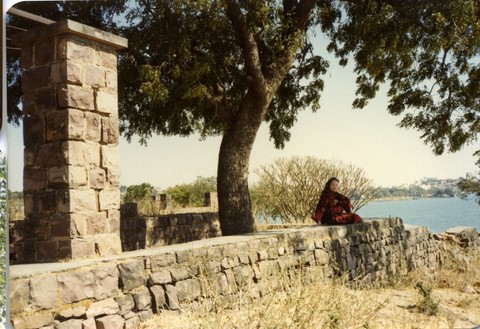
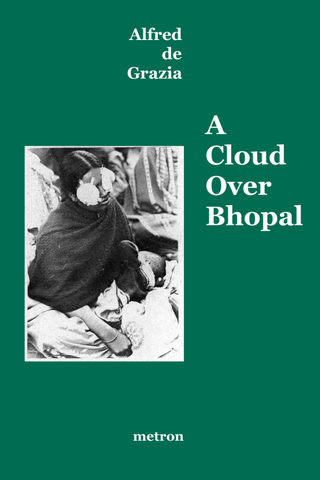
Six weeks after the chemical catastrophe, Alfred de Grazia journeyed to the site, in the company of a small team composed of Dr Rashmi Mayur, founder of the Urban Development Institute, Bombay (Mumbai), President of the UN-NGO Global Futures Network, one of the first Indian environmentalists and his former student and disciple at New York University; Dr Khumud Ini Mayur, Rashmi's sister, a biochemist; and me, Anne-Marie (Ami) de Grazia, Alfred de Grazia's wife. We stayed in Bhopal for six days. Alfred de Grazia and I then stayed in India until April 1985, writing the book A Cloud Over Bhopal and publishing it as soon as finished in Bombay (Mumbai). While in Bhopal, I took pictures on one or two rolls of film. I half-forgot about them. They have never before been published or shown. They are uncropped and unedited.
All pictures are by Anne-Marie de Grazia
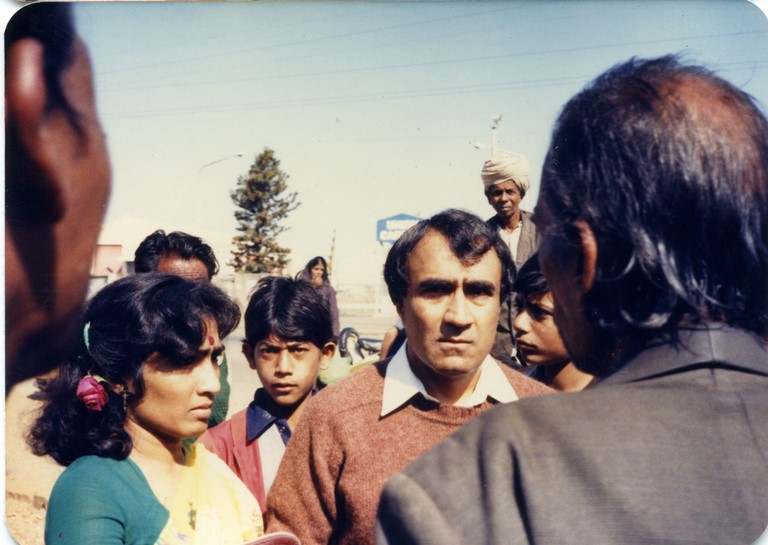
Khumud Ini Mayur and Rashmi Mayur in front of the Union Carbide factory in Bhopal
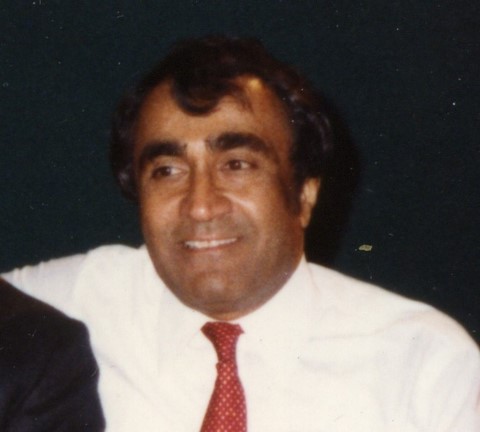
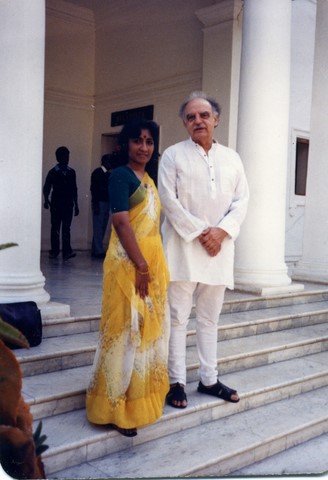
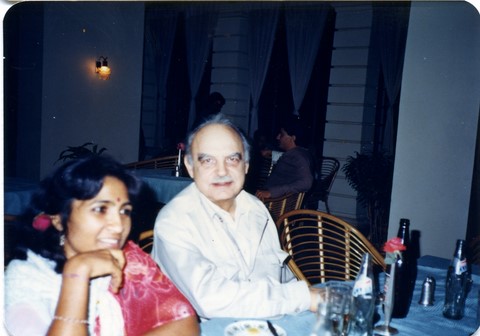
Khumud Ini Mayur and Alfred de Grazia
x
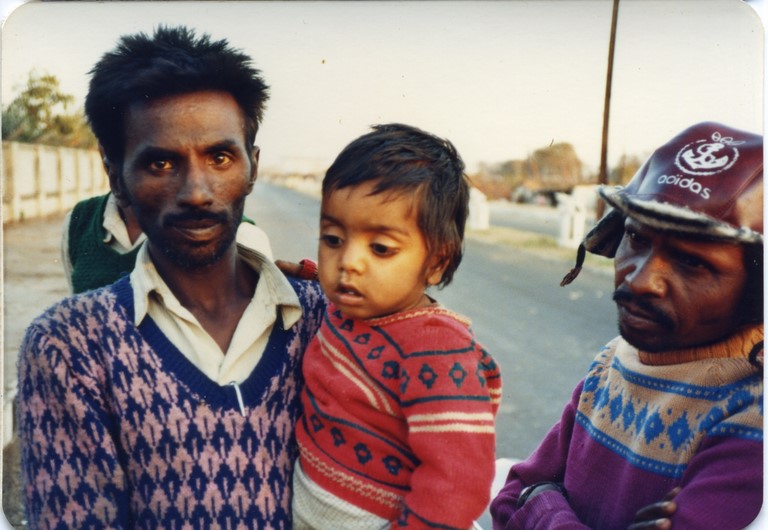
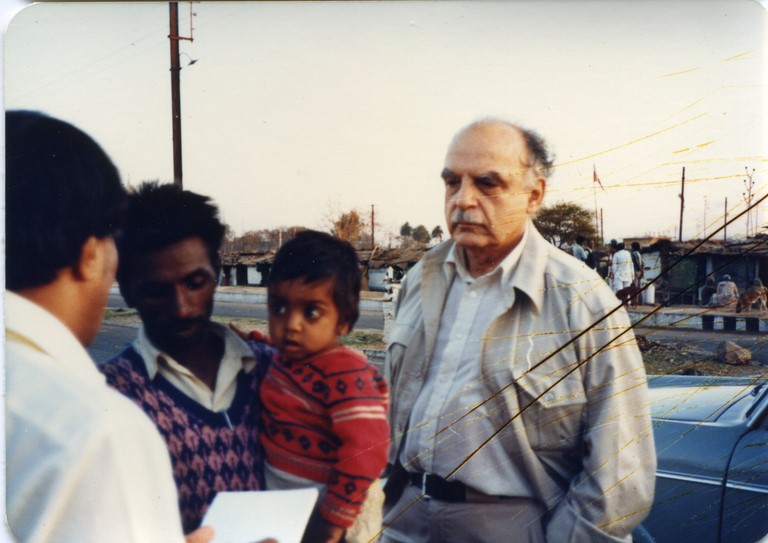
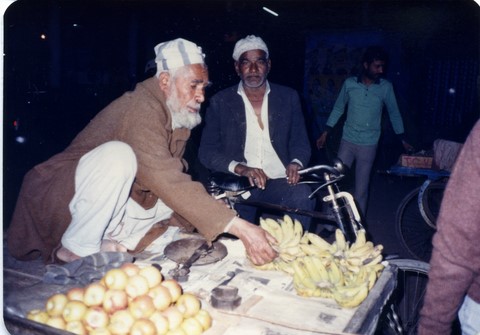
The first "face" of Bhopal, at the end of the day of our arrival: a man, a worker at the factory, who had lost his wife; he is with his child and his friend. To the left, the fence of the factory compound. To the right, across the street, the slums, better visible on the picture below, with Alfred de Grazia.
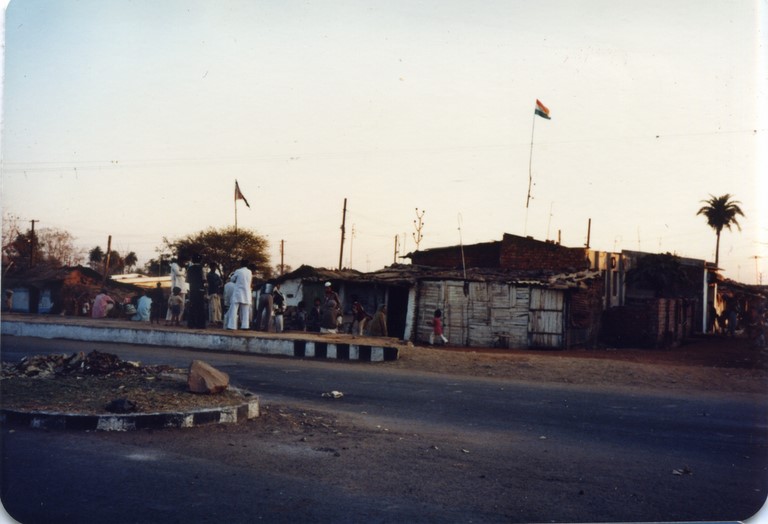


The Union Carbide Factory
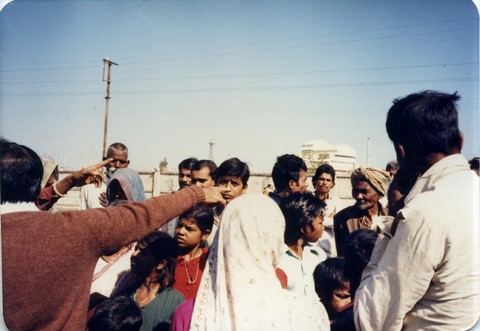
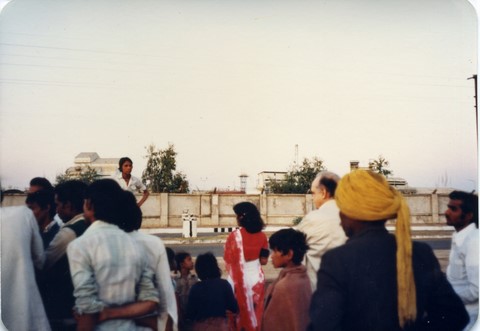


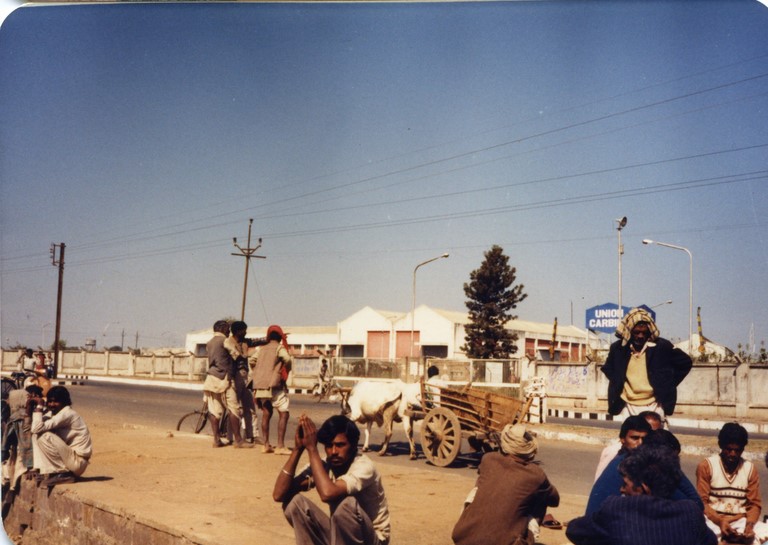
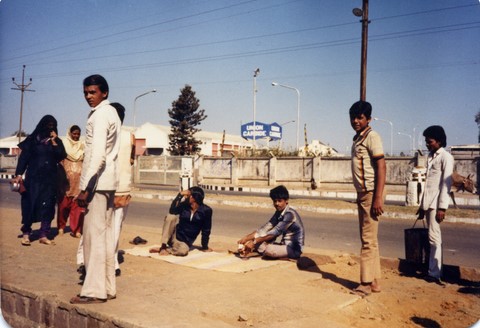
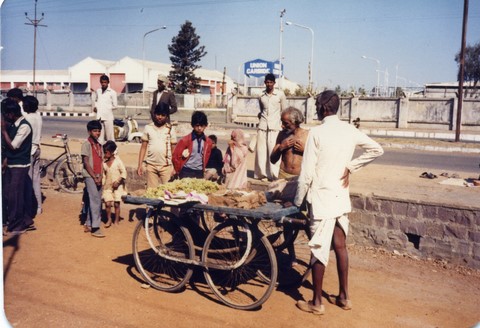
Where workers lived
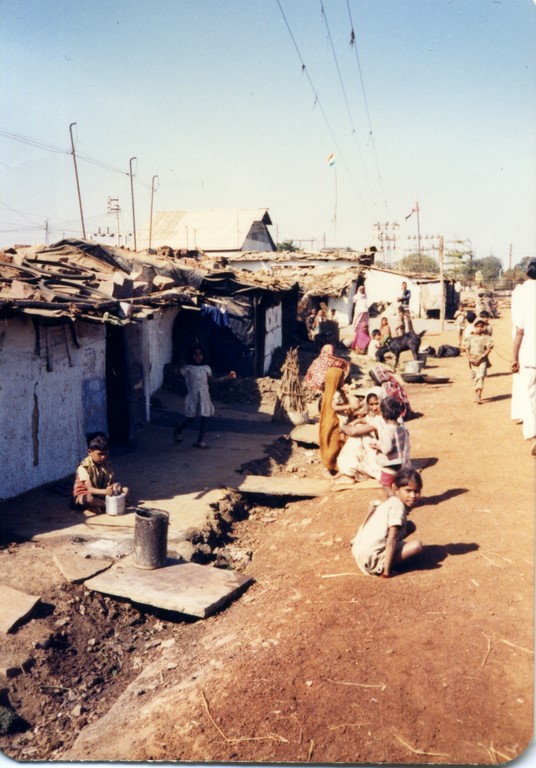
where most of the workers - and the victims - lived..
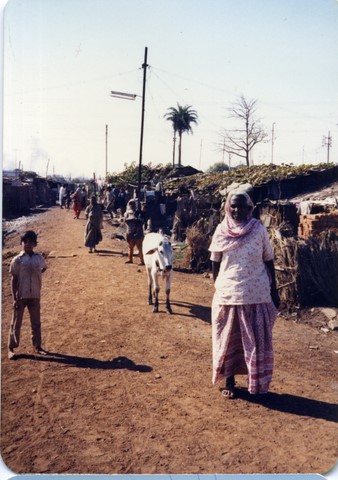
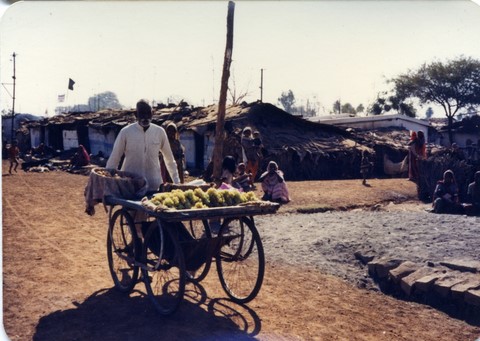
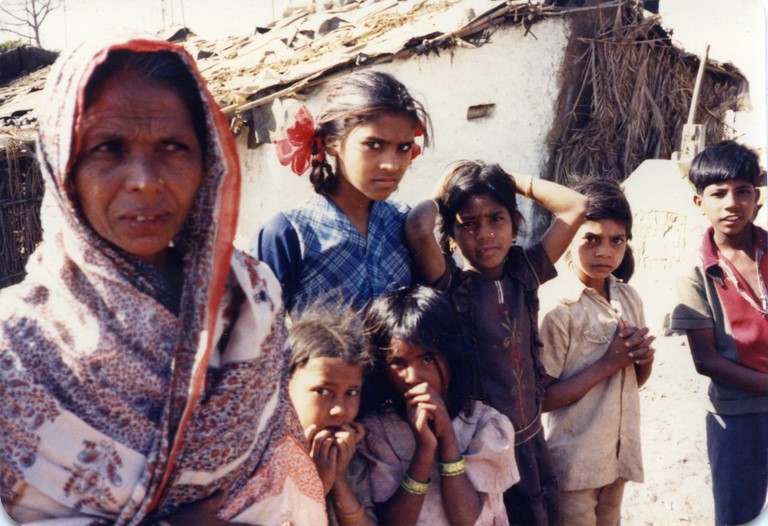
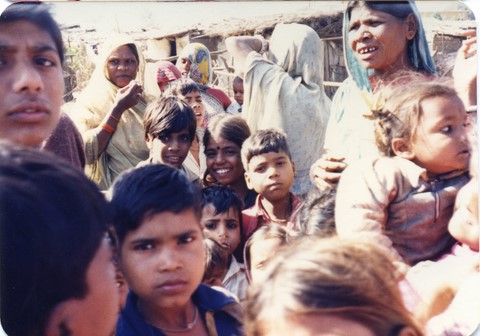
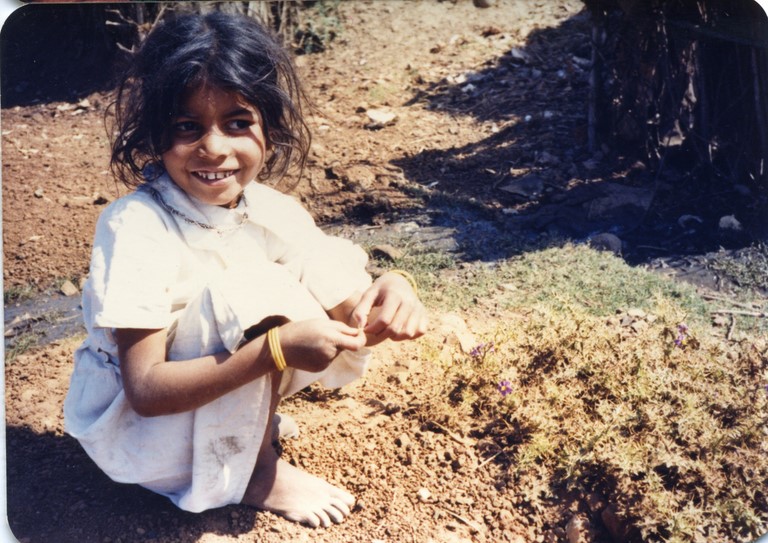
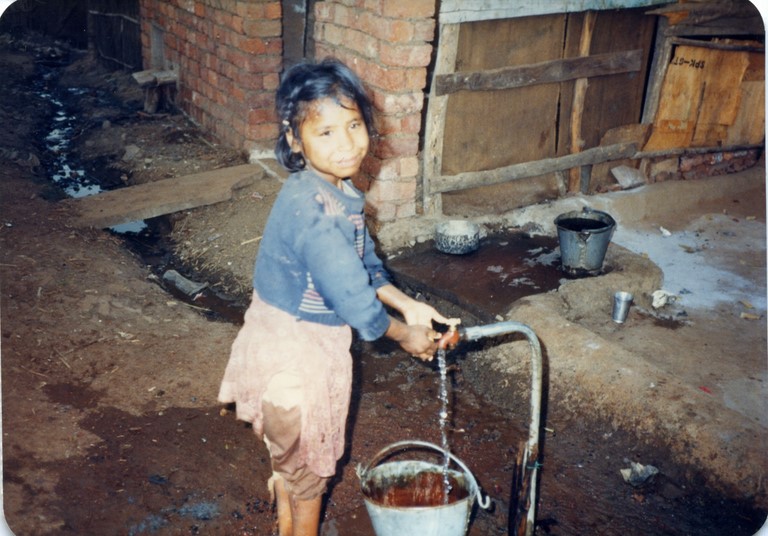
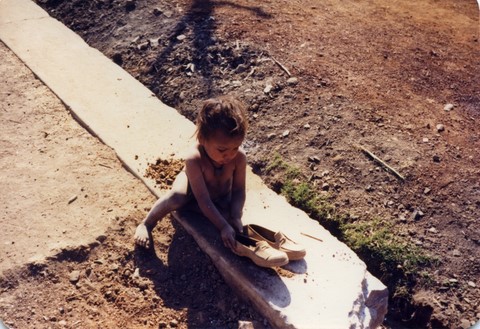
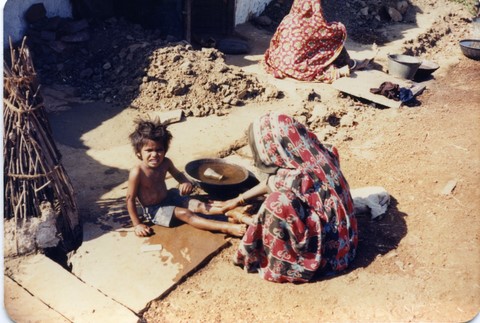
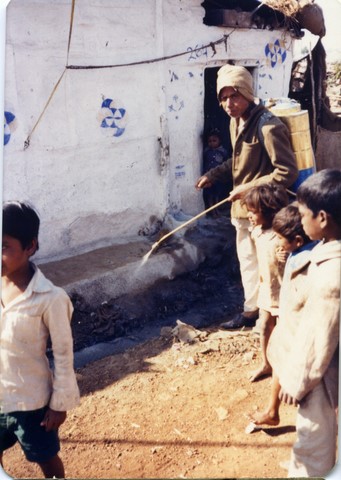
The man who desinfects the open sewers...
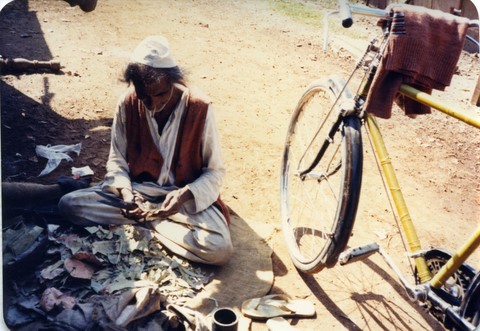
The roller of beedie-cigarettes... He was able to escape the poisonous cloud on his bicycle, with his daughter (right) sitting on the handle-bar...
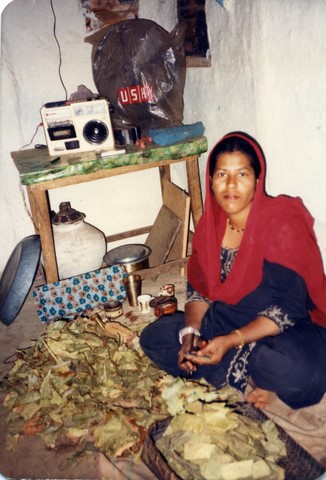
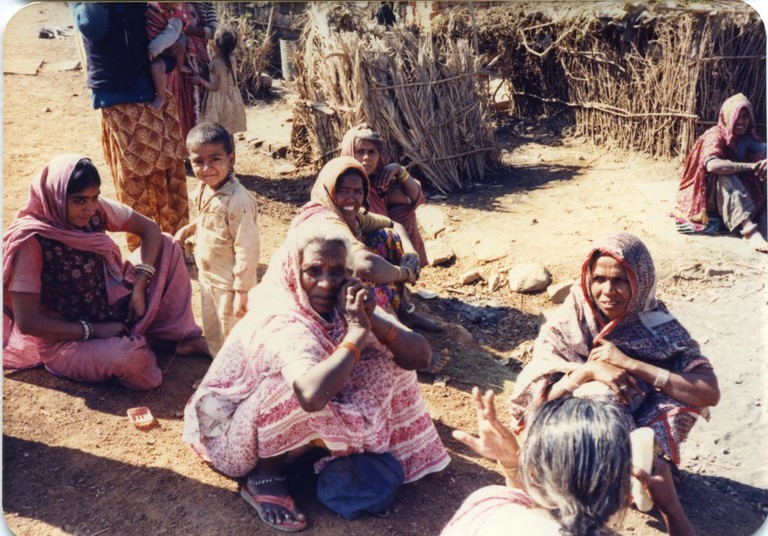
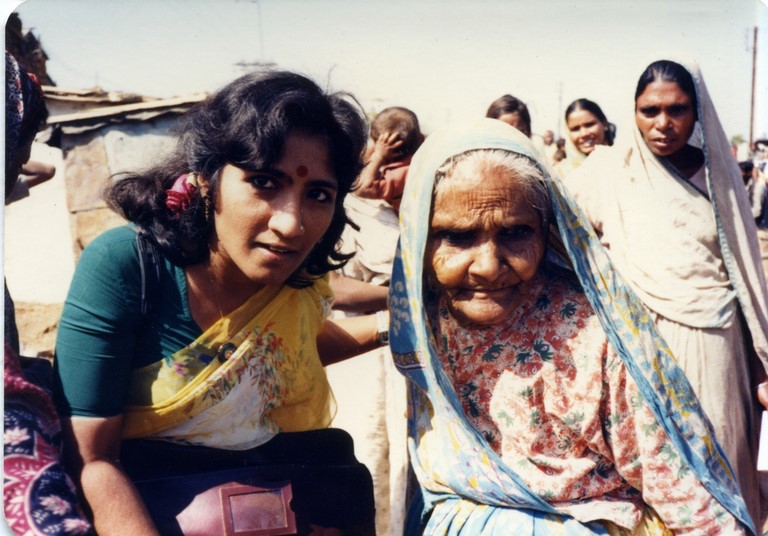
Khumud Ini Mayur spoke to the women...
Rashmi Mayur spoke to the men...
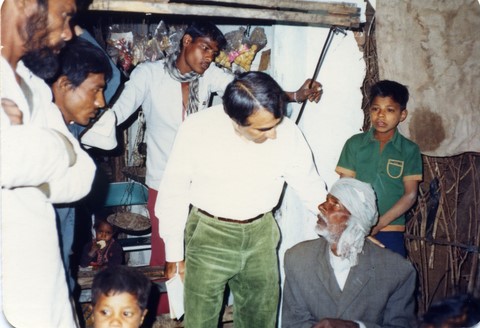
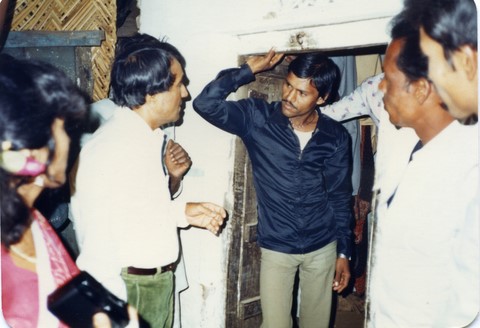
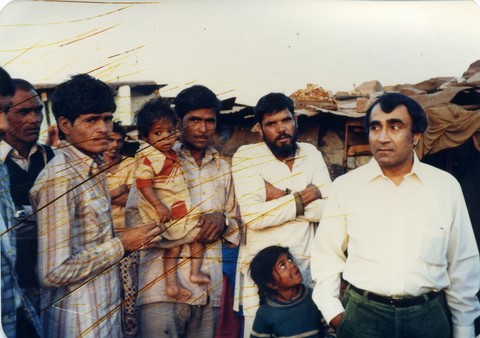
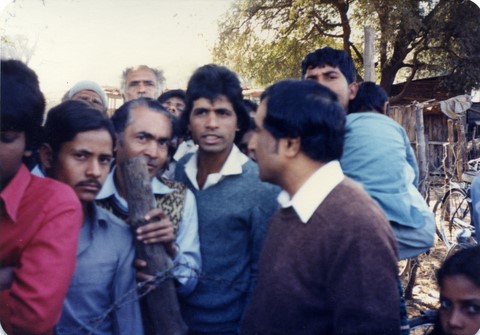


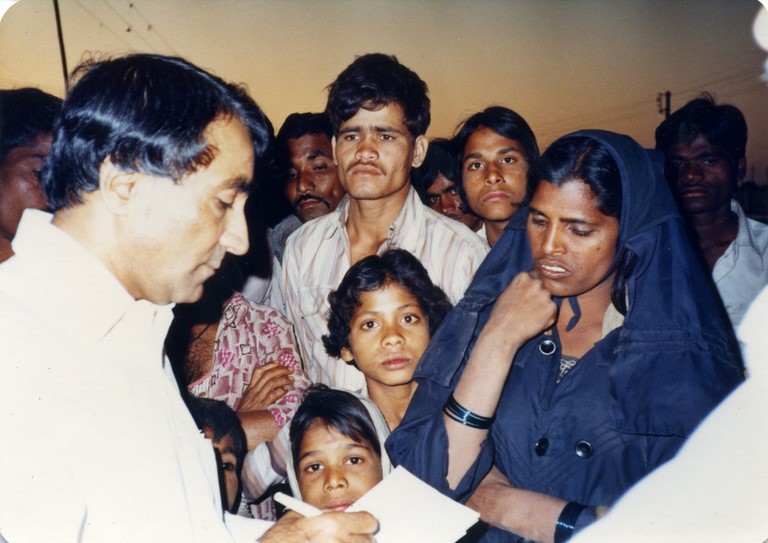
The team returned towards evening...
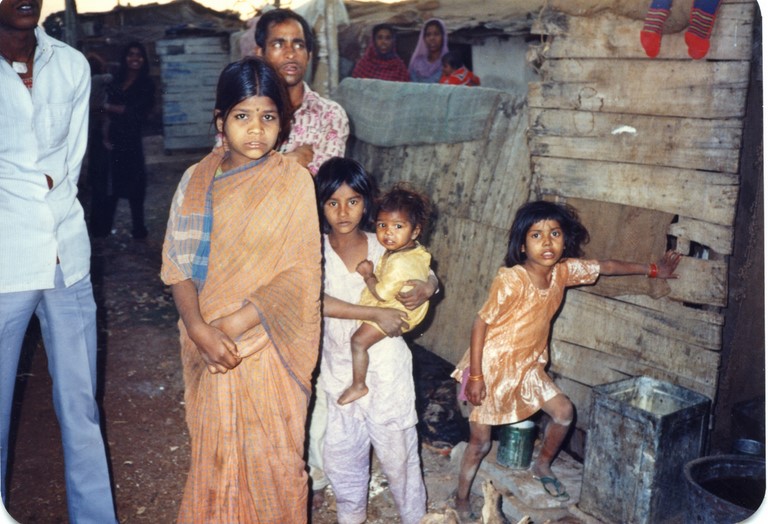
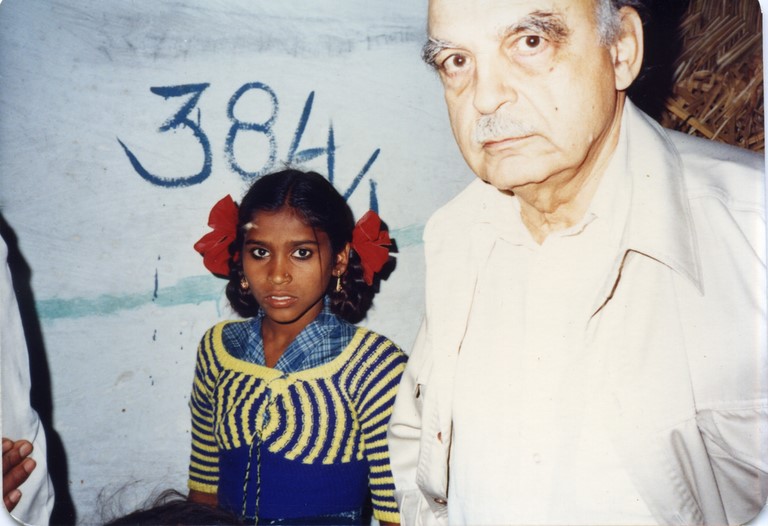
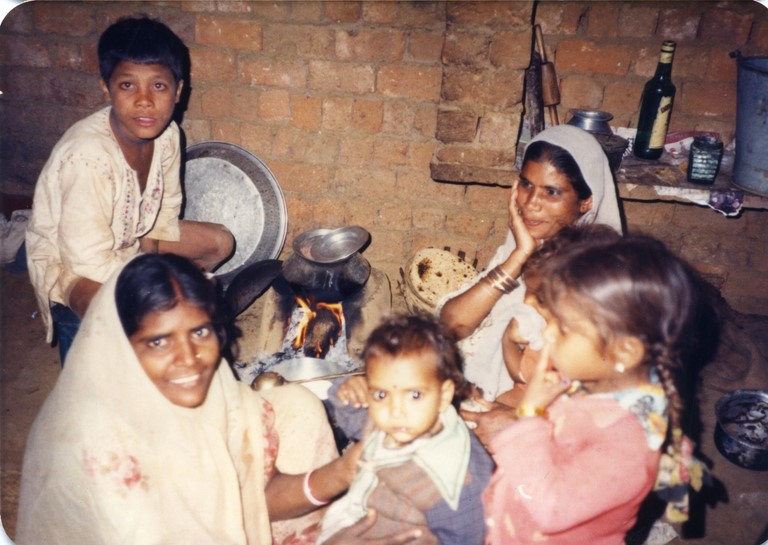
and were invited into some of the homes...
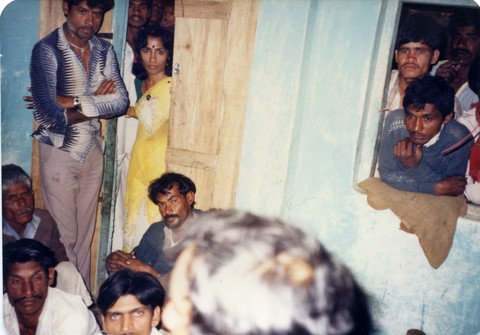
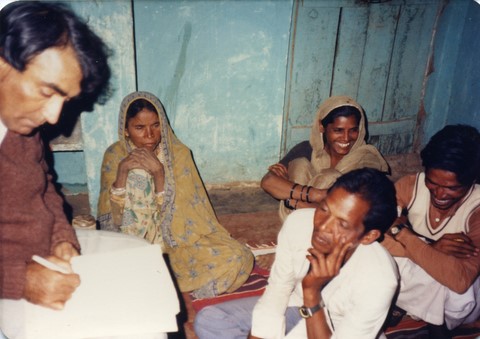
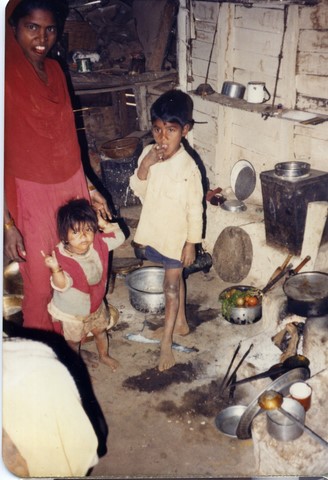
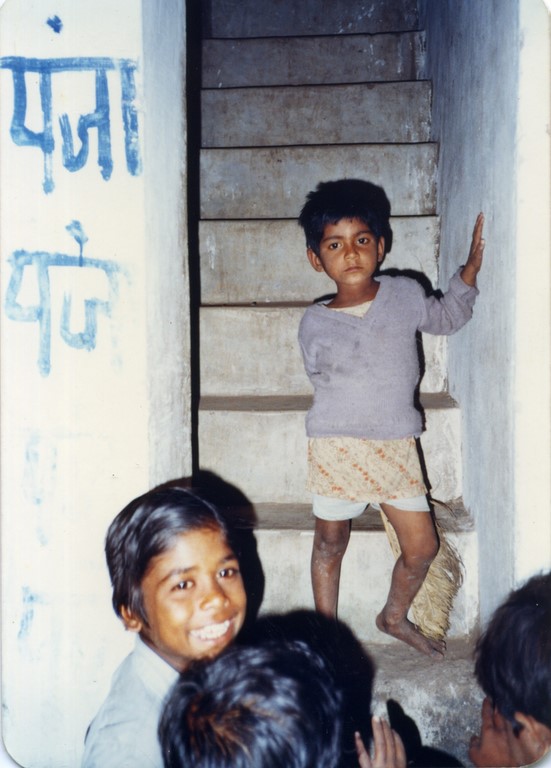
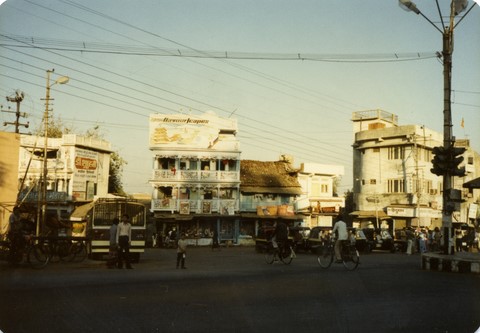
We visited parts of the old city of Bhopal which had also been heavily affected by the poisonous cloud
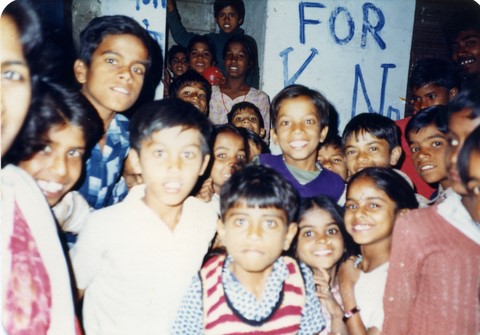
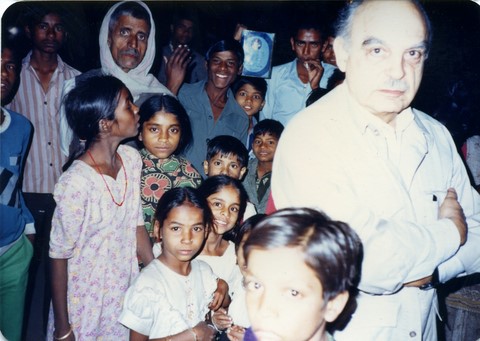
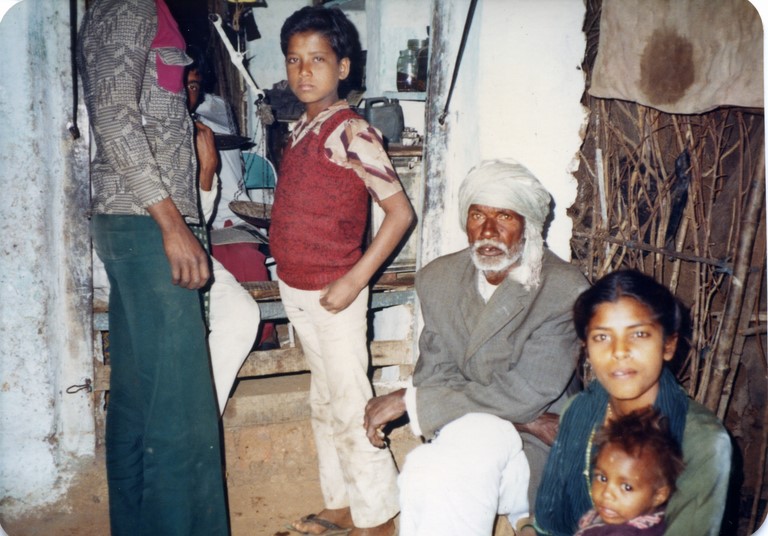
The City of Bhopal
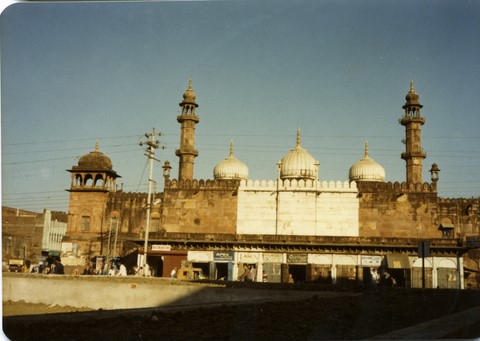
The 17th/18th century mosque is the largest in Asia.
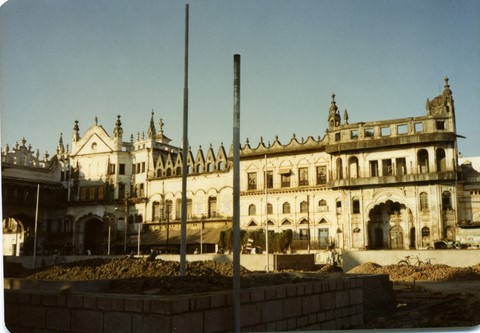
The decaying 18th century palace by the lakes is known as the "Versailles" of India.
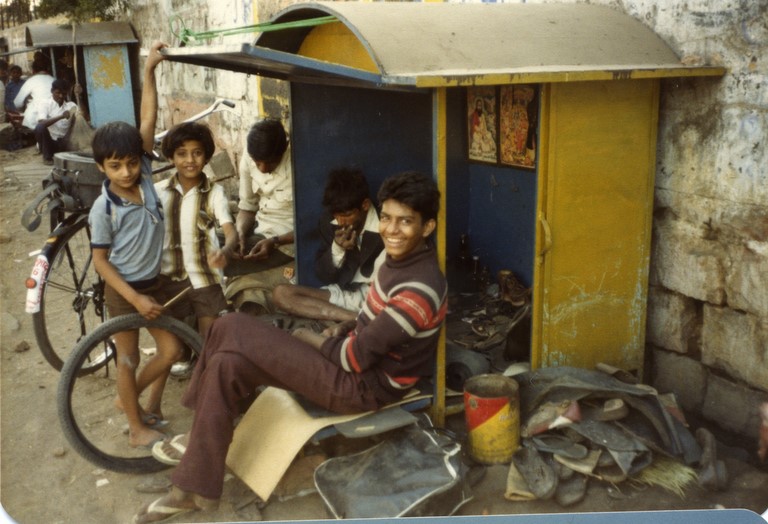
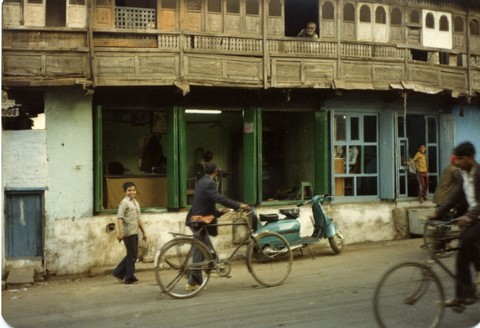
Streets of Bhopal
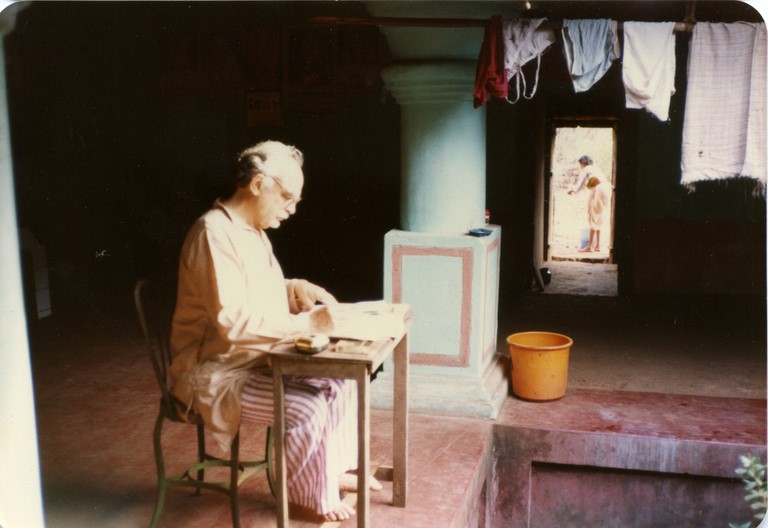
The writing of "A Cloud Over Bhopal"
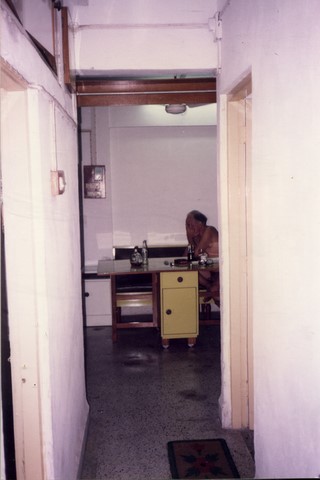
...then in an apartment in Bombay (Mumbai). We used one of the first model of something approaching a laptop ever made, a small portable electric typewriter with a tiny memory (it used paper and printed.) When we brought it through customs upon entering the country, we were smacked with a paper ordering that we will not be able to leave the country unless we take this devil's machine along with us. We used it to pay, in part, for the printing of the book. Long tractations with the customs authorities had to be engaged in order to free us from the obligation of taken it back out of the country. The book was published in Bombay at Commercial Arts.
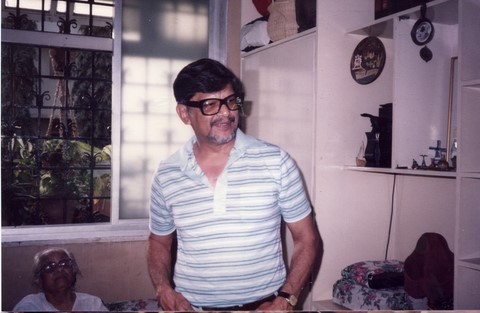
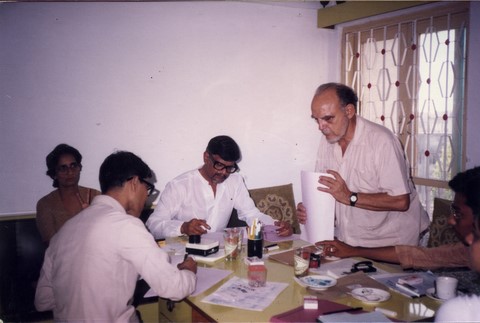
In Bombay, we received the support of many of Rashmi Mayur's friends, such as Arun Gandhi, the Mahatma's grandson...
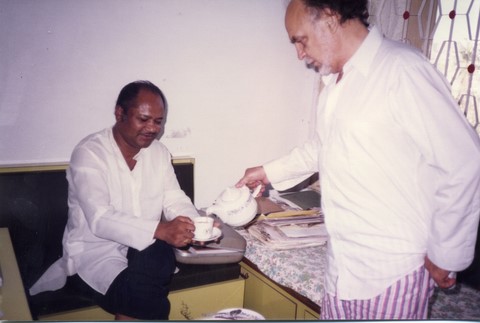
...Whag, a human rights activist...
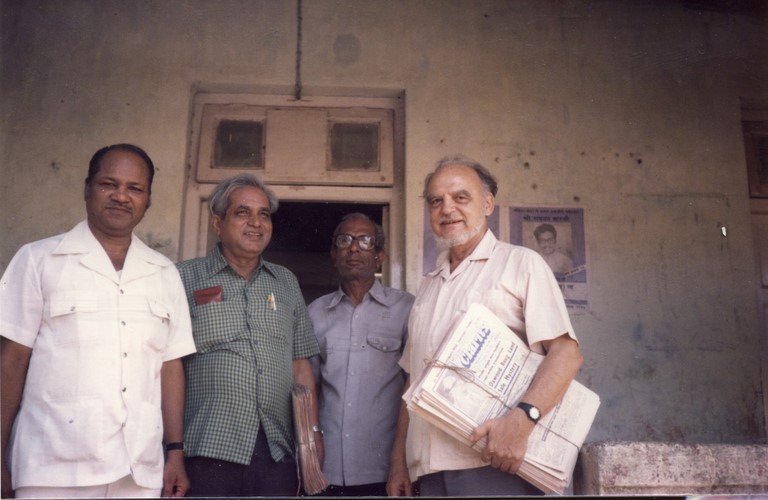
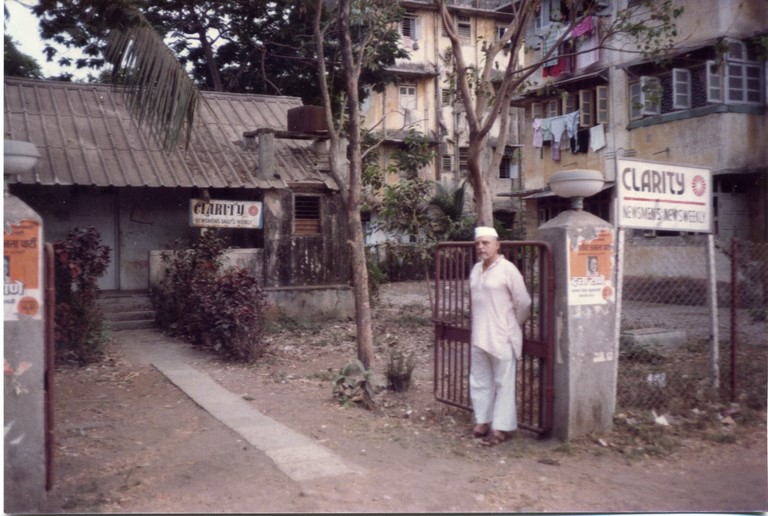
...and S. B. Kolpe (second from the left), President of the All India Union of Working Journalists and of the Union of Journalists of Bombay. S.B. Kolpe, who had been imprisoned for two years by the British at the time of the "Quit India" movement, was a historic leader of the Indian Trotskyites and founded a succession of newspapers around which Trotskyite and Marxist parties organized. He was publishing the weekly newspaper "Clarity," which had intensively covered the Bhopal catastrophe. Nicholas Coleridge grants him "a heroic leftist career." (From l. to r.: Wagh, Kolpe, an important Marxist intellectual whose name I don't remember, Alfred de Grazia. Together with Rashmi, they brought together an audience of over one thousand in Bombay, mostly students, to whom Alfred exposed the principles of Kalos and his political thinking.
A Word about Rashmi Mayur